Articles·AI agents
“About 10 extra minutes at the beginning of each session.” How an AI second brain stops your agents from forgetting.

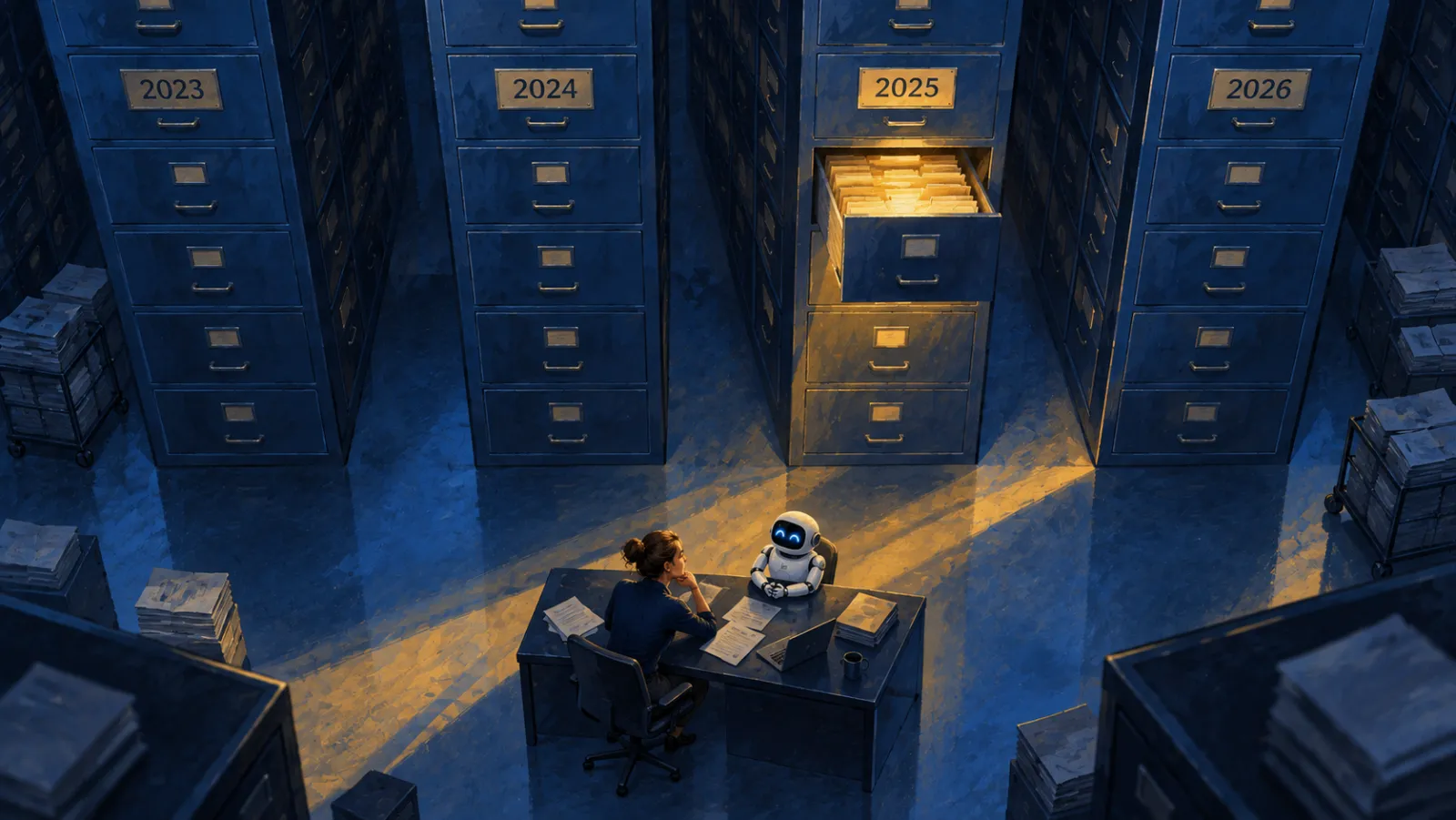
An AI second brain is one shared memory that every AI agent in your business reads before it starts work, so nobody has to explain yesterday all over again. The fix is a memory that saves what happened automatically, keeps decisions only after a person approves them, and briefs every agent at the start of every session. Before I built mine, I’d spend about 10 extra minutes at the beginning of each session with my agent, explaining what happened yesterday and what I wanted today to look like.
Why does AI forget what you already decided?
AI forgets because every new session starts close to blank. An assistant like Claude or ChatGPT remembers the conversation you’re in, and some keep a few saved notes. What you decided with one assistant doesn’t reach the next one, and the notes it keeps are the ones it picked.
For an agency, the forgotten details are the expensive ones: which carrier a group moved to, the price you settled on, the client who wants a call and never an email. The things my agents forgot that I’d already decided, before I had an organized memory system, are so many that I can’t even think of just one.
What do most agencies try first?
Most agencies try a notes doc pasted into the start of each chat, or the memory built into the AI app they already use. The notes doc works until it gets long and nobody keeps it current. The built in memory lives inside one app, so a second agent or a second person starts from zero.
My first version was me. Every morning I’d recap yesterday out loud to the agent, then tell it what today should look like. That’s about 10 minutes a session, every session, spent on something a filing system should do.
Wanna fix it?
AI that forgets gets fixed with shared memory: one AI knowledge base that logs what happens automatically, keeps decisions only after a person approves them, and briefs every agent before it starts. Mine is a four level business brain, and it runs on Claude.
- Log every conversation automatically. After every exchange, a small AI writes a few bullets into that day’s log. I have 131 days of logs as of this writing.
- Approve what becomes permanent. The log proposes facts worth keeping: a decision, a person, a correction. They wait in a review list. Nothing becomes permanent until it’s approved.
- Keep a short “right now” page. This week’s deals and decisions, plus who you are and how you like things done, load into every session. A hard size limit keeps it short. If it’s full, something old goes before something new gets in.
- Write the reference pages. Longer pages on your processes, your people, and your voice.
- Clean it weekly. Every Sunday a cleanup pass archives outdated notes and replaces decisions that got overruled, so old answers don’t sit next to new ones. It never deletes anything.
What does it look like once it’s running?
Once shared memory is running, the morning starts with a briefing instead of a recap. Every weekday at 7:00, a briefing lands with what’s due, messages the agents left for each other, and meetings that ended without a next step.
Every agent opens with the same memory. My executive assistant, my business coach, the writers room, and my CRM all read from one brain. A decision I make with one of them is there for the others next session. Ask the brain a question and it answers with a citation to each stored note it used, so I can check where an answer came from. It holds more than 125 decisions and 62 notes on people.
The 10 minute recap is gone.
Can you do this yourself?
Yes, for one person with one assistant. Keep a single page with three headings: decisions, people, and how you like things done. Paste it into your Claude or ChatGPT project instructions and update it every Friday.
The page stops working when more than one agent or more than one person needs the same facts, or when it gets longer than you’ll actually keep current. One assistant, keep a page. Three agents, build the memory.
Quick answers
- What is an AI second brain?
- A shared memory that stores your decisions, people, and preferences so every AI agent starts work already knowing them.
- What’s the difference between AI memory and an AI knowledge base?
- AI memory holds what you decided and how you work. A knowledge base holds reference material like processes and plans. A good second brain holds both.
- Does it save everything automatically?
- The daily log does. Permanent facts wait for a person to approve them.
- Can different AI agents share one memory?
- Yes. Every agent reads the same memory at the start of each session.
- How does old information get cleaned up?
- A weekly cleanup archives outdated notes and replaces overruled decisions. Nothing is deleted.
- Has DoBetter built this?
- Yes. Chris Cordon runs DoBetter on a four level brain with 131 days of daily logs as of September 2026.
Next step
I’m Chris Cordon, and I build systems like this for benefits agencies at DoBetter (dobetter.plus). The intro call is free and takes 30 minutes: dobetter.plus/talk.
+Talk to Chris